Table of contents
It rarely happens in the obvious places. You can spend days ticking off landmarks, eating where every guidebook points you, and still feel like you are observing a city through glass, yet a single unexpected activity, a class you joined on a whim, a bus ride you misread, a neighborhood event you stumbled into, can cut straight through that barrier, and suddenly you are speaking to people rather than “visiting” them. Travel in 2026 is crowded, expensive, and often over-planned, which is exactly why small, unglamorous experiences can be the fastest way to meet locals, and to understand what matters to them.
When I stopped touring, conversations started
For years, I thought “connecting with locals” meant doing the right things, choosing the right restaurant, booking the right walking tour, learning the right ten phrases, and behaving like a respectful guest. All of that helps, but it does not guarantee the moment where a place shifts from postcard to living community. That shift began for me when I accidentally built slack into my days, and it was not laziness, it was an antidote to the modern travel habit of optimizing every hour, a habit reinforced by social media, short-term rentals, and the fear of “wasting” a trip that cost real money.
Data backs up the intuition. Across major destinations, the post-pandemic rebound has been strong, and with it, the pressure on historic centers. Eurostat’s latest full-year figures show tourism nights in the EU reached record levels in 2023, and 2024 continued the trend in many countries, which means the most visited districts feel less like neighborhoods and more like transit corridors. In that environment, scheduled sightseeing often keeps you in the same crowded loops as everyone else, and locals who work those loops tend to perform a role rather than share a life. The breakthrough came when I deliberately chose low-stakes activities that locals do for themselves, not for visitors, and I did them at local hours, in local places, and with the humility of being new at something.
A community gym session was my first lesson. I had joined because it was raining, and because I needed to move after too many museum days, yet within minutes, the tone was different from any “tourist experience”. People asked practical questions, not polite ones, about where I lived, how long I was staying, whether I had found a decent bakery, and those questions led to recommendations that never appear in lists, the kind that come with warnings about peak times, or with a specific bench to sit on. The more I admitted what I did not know, the more conversational doors opened, and I realized that connection is often a side effect of shared context, not a goal you can chase directly.
A cooking class revealed the real city
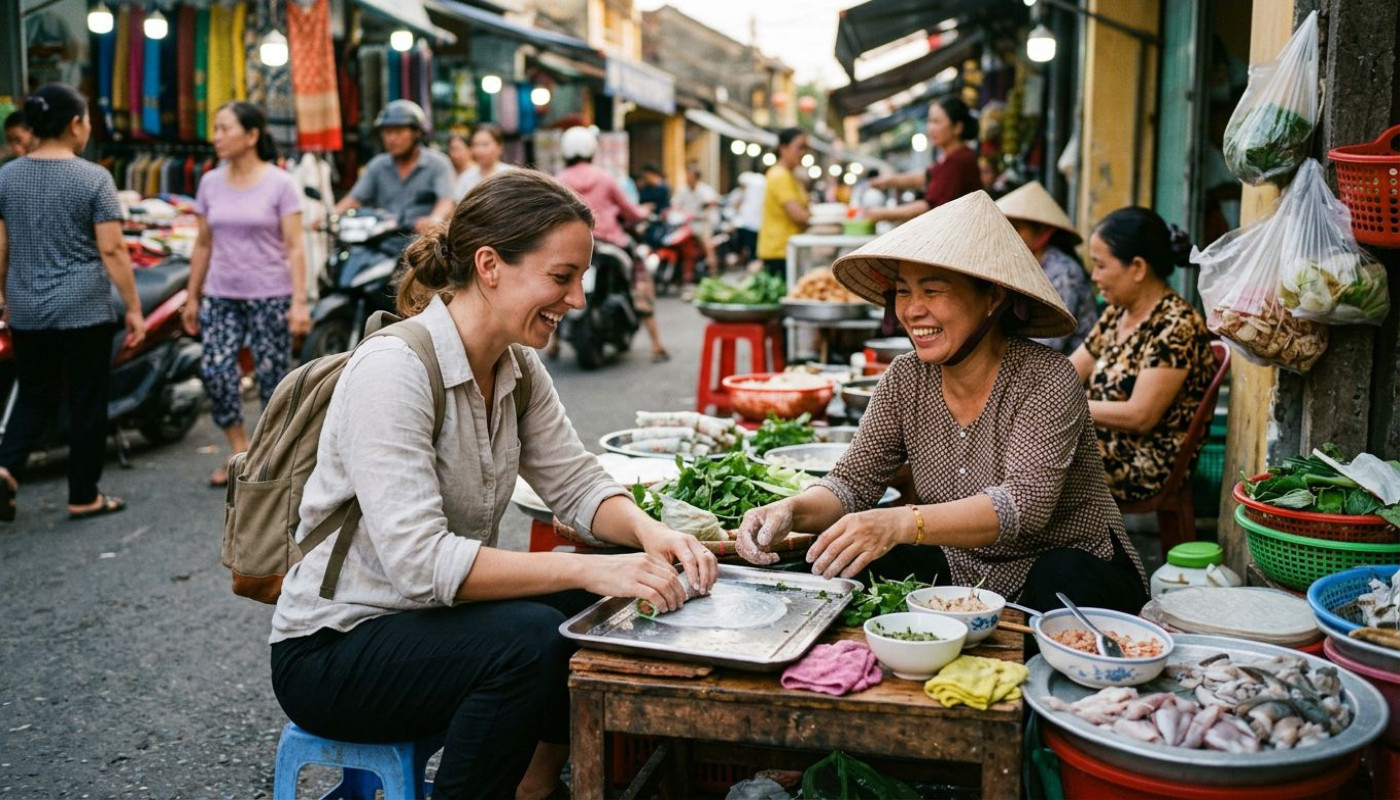
Food is an obvious bridge, but not in the way travel marketing sells it. The breakthrough is not the plated dish, it is the messy middle, the shopping, the arguments about ingredients, and the tiny routines that show how households actually live. I joined a small cooking session expecting technique, and I ended up with a crash course in local economics, family structures, and the quiet logistics of daily life, because people talk differently when their hands are busy. Someone will mention rent without trying to make a point, another person will complain about public transport as they chop onions, a third will tease a neighbor about a football result, and you start to hear what a city cares about, in the cadence of casual speech.
This is also where tourism’s numbers become personal. The UN World Tourism Organization has repeatedly highlighted that international arrivals have rebounded strongly since the pandemic shock, and while the macro story is about recovery, the micro story is about pressure, who can still afford to live in the center, which streets have become “for visitors”, and how seasonal work reshapes local life. In a kitchen, those themes appear not as slogans but as lived reality, and you learn to ask better questions, the respectful kind that do not force someone to represent an entire city. You also learn to offer something back, even if it is small, washing up without being asked, sharing a recipe from home, or simply listening without turning the conversation into a comparison.
The unexpected part was how quickly invitations followed once I stopped treating food as content. A quick trip to a neighborhood market became a lesson in trust, and I was told which stallholders are fair with tourists, which ones are not, and why prices fluctuate week to week. The local I was with did not perform generosity, they practiced it, and I realized that in many places, visitors are not disliked, they are just exhausting, because they demand attention without noticing the work behind it. In that sense, the cooking class was not about cuisine, it was about learning the social grammar of being a guest.
Small festivals beat famous attractions
Want to hear a city’s true voice? Follow its calendar, not its monuments. A big attraction draws crowds that behave similarly everywhere, they queue, they photograph, they leave, and the surrounding businesses adapt to speed and volume. A small festival, a neighborhood concert, a local sports match, a school fundraiser, even a modest religious procession, changes the balance completely, because the primary audience is local. You are not the main character, and that is precisely why it works. You can stand at the edge, watch how people greet each other, notice who brings food, who arrives late, who knows the lyrics, and you start to understand what “community” looks like when it is not staged.
There is a practical reason these events matter now. Many European cities are experimenting with measures to manage visitor flows, from day-trip restrictions to cruise passenger limits and short-term rental regulations, and whether those policies succeed or fail, they reflect a shared reality: the center cannot absorb infinite demand. Smaller, dispersed events naturally spread people out, and if you attend respectfully, they are one of the few spaces where locals are not forced into transactional contact. I learned to arrive early, to ask before filming, to buy something small without treating it as a souvenir hunt, and to accept that sometimes, the best way to be welcomed is simply not to take up too much space.
In one case, I asked a straightforward question, where the queue started, and that led to a 20-minute conversation about the neighborhood’s changes, the kind of candid exchange that never happens when someone is “on the clock”. Another time, I was handed a flyer for a community meeting, not because I needed to attend, but because someone wanted me to understand that a place is not just a destination, it is a set of concerns, budgets, and compromises. That was the surprising lesson: connection is often political in the softest sense of the word, it is about belonging, stewardship, and the right to feel at home, and the smallest festivals make that visible without preaching.
In Dubrovnik, the detour made it personal
Dubrovnik is a perfect laboratory for these lessons, because it is both deeply local and heavily visited, a city where the contrast between residential life and visitor traffic can be stark within a few streets. The old town is extraordinary, but it is also a magnet, and magnets have a cost. If you want more than a beautiful walk, you need a detour, a reason to leave the main flow, and an activity that places you alongside residents rather than in front of them. That is how a city with global fame becomes a place with names, jokes, and everyday rhythms.
My most meaningful encounters came from choosing experiences that felt slightly off-script, and from taking the logistics seriously, because nothing kills openness like a stressed-out visitor who arrives late, confused, and demanding. Planning helped, but not the rigid kind; I looked for options that created room for conversation, and I avoided the busiest choke points at the busiest hours. When you are trying to meet people in a place as popular as Dubrovnik, the “how” matters as much as the “what”, and that includes choosing small-group formats, local guides who live the place daily, and routes that acknowledge the city’s constraints.
For readers building a trip here, one practical starting point is to browse locally oriented options, compare timings, and pick something that matches your pace, whether that is a boat day that includes quieter coves, a walk that takes you beyond the most photographed viewpoints, or a structured day that still leaves space to talk and to linger. A useful directory of ideas is available via https://www.dubrovnik-trip.com/, and the key is to choose one activity that makes you a participant rather than a spectator, because that is where the city starts talking back. Do that once, and the rest of your itinerary changes, you stop hunting for “hidden gems”, and you begin returning to places where you were treated like a person.
Before you go, budget for spontaneity
Connection rarely fits a timetable, so leave space, book one anchor activity early, and keep the rest flexible, and if prices surge in peak months, consider shoulder season when crowds ease and conversations come faster. Set a realistic budget for small purchases, local transport, and tips, and check municipal or national tourism sites for any current discounts, resident-style passes, or museum free days that can free money for experiences.
Similar

How To Choose The Right Yacht For Your Sailing Holiday

Slow Travel: Rediscovering the Romance of Old-World Train Journeys

Finding the Hidden: Unexplored Gems of Scotland's Highlands

Dive into Adventure: The Underestimated Appeal of Ice Climbing
