Table of contents
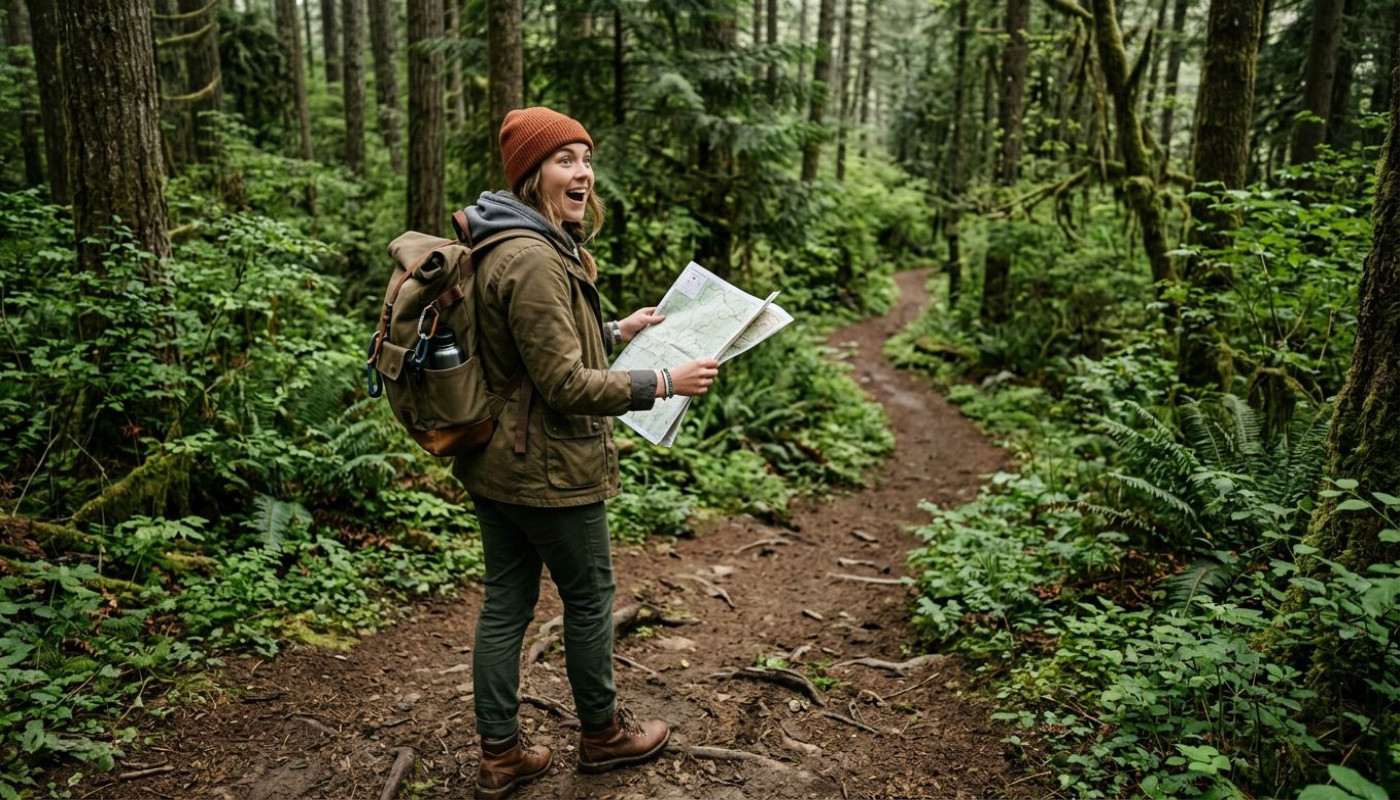
The detour you didn’t plan can end up reshaping the entire trip, and lately, that feeling has become almost mainstream, as flight disruptions, heatwaves, rail strikes, and overtourism push travelers into improvisation. Yet beyond the logistics, getting lost still produces something rarer than a bargain fare: unscripted encounters, altered expectations, and routes that tell a truer story than any checklist. What do we actually learn when the map stops making sense, and why do so many people remember the wrong turn more vividly than the landmark?
When plans collapse, instincts take over
“Are we really going this way?” It is the question that tends to surface just after the battery dies, the last bus pulls away, or the street signs switch alphabets, and it is also the moment when travel turns from consumption into decision-making. Behavioral researchers have long linked novelty and mild stress to sharper memory formation, and the phenomenon shows up vividly on the road: people recall with precision the alley that saved them from a downpour, the café that offered directions, and the stranger who drew a map on a napkin, even when they forget the museum they had booked weeks in advance.
The numbers help explain why this is no longer a niche experience. Air transport has become more volatile across major markets, with recurrent peaks of cancellations and delays since 2022, while European rail networks have faced periodic industrial action and weather-related disruptions; add to that the rise of mobile-ticket ecosystems that can fail in low-signal areas, and “unplanned routing” becomes less a romantic choice than a frequent reality. In that context, improvisation is not simply about spontaneity, it becomes a skill, and travelers who adjust quickly tend to report higher satisfaction afterward, because agency returns the moment you stop trying to force the original plan to survive.
What emerges, repeatedly, is a small set of practical instincts that experienced travelers recognize. First, they shorten the time horizon: instead of salvaging the full day, they focus on the next safe, workable hour, and that reduces panic and opens options. Second, they anchor on a single constraint, such as “find water, shade, and a ride,” rather than juggling ten goals at once. Third, they ask better questions of locals, not “where is the best place,” but “what is open now,” “what is safe after dark,” and “what would you do if you had two hours,” because specificity produces useful answers and builds trust quickly.
The best stories start with a wrong turn
It never begins as a story. It begins as annoyance, a missed exit, a bus that does not come, a trail that fades into scrubland, and then, slowly, the trip opens sideways. Ask anyone who keeps travel journals and you will see the pattern: the narrative heart is rarely the attraction itself, it is the sequence of small recoveries that follow the mistake, and the characters are often ordinary people met in ordinary places, a mechanic, a shopkeeper, a grandmother at a roadside table, the only person in a station who speaks your language.
Across spontaneous travel accounts, one of the most consistent “lessons” is how quickly the brain recalibrates what counts as valuable. The planned highlight, the famous viewpoint, the dinner reservation, all of it can lose its gravitational pull once you have navigated a real-world problem, because competence feels rewarding. Psychologists describe this as a form of intrinsic motivation: the satisfaction comes from solving, not from owning the experience, and that is why travelers can describe a chaotic afternoon with surprising affection, even when they would never choose to repeat it.
There is also a social dynamic that planned itineraries tend to starve. When you are late, slightly lost, and visibly in need of help, you become more approachable, and the encounter flips from transactional to human. Travel researchers have noted that “helping interactions” create stronger interpersonal impressions than neutral exchanges, which may be why the person who walked you to the correct platform becomes unforgettable. In practice, the best spontaneous routes often follow the contours of these interactions: you end up in the neighborhood someone recommends because it is “where families go,” you take the earlier ferry because a local insists the weather will turn, you skip the crowded site because a café owner says the light is better elsewhere at sunset.
Spontaneity meets the data of overtourism
Freedom is getting harder to find. In many destinations, the pressure of visitor numbers has changed the texture of travel, with timed-entry systems, reservation-only access, and neighborhoods strained by short-term rentals, and those forces quietly push travelers toward either hyper-planning or accidental exploration. The paradox is that the same overcrowding that makes famous places stressful can make detours more rewarding, because the “second city,” the inland route, or the shoulder-season village offers what people say they want: space, affordability, and genuine contact.
Consider how demand concentrates. Landmark sites and social-media hotspots create predictable peaks at predictable hours, and that concentration affects everything from restaurant availability to local transport capacity. When one train is full or one road is blocked, the overflow disperses into side routes, and that dispersal is where spontaneous itineraries are born. The data points that shape these flows are familiar: high-season occupancy spikes, rising daily costs in central districts, and the widening gap between headline destinations and the regions around them, which often remain under-visited despite comparable landscapes and culture.
For travelers, the practical takeaway is not to chase emptiness, it is to understand how crowds behave, and to plan lightly around that behavior. Early departures and late arrivals work because they run against the tide; midweek moves can save money because they dodge weekend pricing; and staying one or two nights outside the core can change the entire rhythm, because you are no longer competing for the same limited slots. This is also where serendipity becomes strategic: by leaving slack in the schedule, you create room to accept a local suggestion, to linger where it feels right, and to abandon the “must-see” that everyone else is queuing for.
Some travelers now deliberately design “failure-friendly” routes: a primary plan and a fallback that is genuinely appealing, not a consolation prize. It might be a coastal day with an inland alternative if the wind cancels boats, or a city break with a nearby town that can be reached by regional rail if the main line is disrupted. That mindset does not kill spontaneity, it protects it, because the detour stops feeling like defeat and starts feeling like a second door you were always willing to open.
Choosing a detour can change a country
A single pivot can redraw the map. Travelers who intend to “do a region” often end up doing something else entirely after one unplanned night, because place is not just scenery, it is logistics, language, and the kind of welcome you encounter when you arrive without rehearsal. In Southeastern Europe, for example, spontaneous routing can be particularly transformative: distances are short, landscapes change quickly, and local advice still carries unusual weight, because many experiences are not packaged for mass tourism and require on-the-ground judgment.
This is where preparation matters, not as a rigid schedule but as an information advantage. Knowing the basics of road conditions, public transport frequency, and seasonal closures turns a detour from risky to plausible, and it lets you say yes to the invitation that would otherwise feel reckless. Travelers who do this well typically hold three things lightly: the order of stops, the duration of each stay, and the definition of what “counts” as the trip, because the goal becomes coherence, not completion.
For those looking to build a route that can absorb surprises while still feeling purposeful, it helps to consult resources that describe real connections between places rather than just listing attractions. If you are weighing a last-minute pivot in the Balkans, whether for beaches, mountains, or culture, why not find out more about local routes and on-the-ground options that can make a spontaneous decision feel informed, and therefore more enjoyable.
The most striking lesson, in the end, is that getting lost rarely stays purely accidental. Once you have experienced the payoff of a good detour, you start building trips that invite them: you leave an empty day between major moves, you pick accommodations with flexible cancellation, and you travel with the assumption that the best hour might be the one you cannot yet name. The story improves, and so does the traveler, because the route stops being a line on a screen and becomes a sequence of choices made in the real world.
What to book, what to budget, what to keep flexible
Reserve only what would hurt to lose: key transport legs, and one or two high-demand visits, then keep lodging cancellable and leave gaps for detours. Budget for the unexpected, with a contingency of roughly 10% to cover last-minute taxis, alternate tickets, and one extra night. Check local and national tourism sites for seasonal passes, youth or rail discounts, and any regional incentives that can soften the cost of changing plans.
Similar

Lost Or Found: The Unexpected Joy Of Getting Off Itinerary
The Art Of Packing Light: Lessons From Seasoned Explorers
Packing Regrets: Overlooked Travel Advice That Changed Real Journeys

Wanderlust Or Burnout: Why Choosing Your Travel Destination Shapes Your Entire Journey

Essential Gear For Your Next Mountain Adventure: Rentals And Tips

Exploring The Benefits Of Private Chauffeur Services For Family Vacations

Exploring The Benefits Of Obtaining A Fiscal Number For Relocating To Portugal
